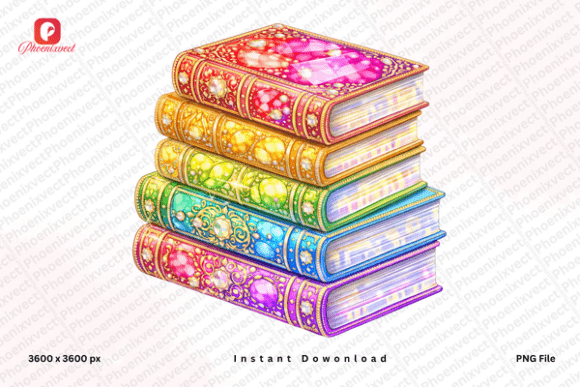
Rainbow Rhinestone Stack Book PNG: A Guide to High-Quality Digital Assets
Digital design has evolved from a niche skill into an essential tool for creators, educators, and small business owners. Whether you are designing classroom decor, creating sublimation prints for t-shirts, or crafting personalized journals, the quality of your assets dictates the professionalism of your final product. One asset that has gained significant traction for its versatility and visual appeal is the Rainbow Rhinestone Stack Book PNG. This specific type of clipart combines the intellectual charm of literature with the luxurious aesthetic of gemstones and gold detailing.
However, simply downloading any image labeled as "book clipart" often leads to disappointing results. Many creators overlook critical technical details, resulting in pixelated prints, difficult editing processes, or designs that look amateurish. Understanding what makes a high-resolution, transparent-background file valuable can save you time, money, and frustration. This guide explores common pitfalls when selecting and using these digital illustrations and offers practical advice to ensure your creative projects shine.
The Misconception of "High Resolution"
One of the most frequent mistakes buyers make is assuming that any large-looking image is suitable for print. In the world of digital art, resolution is measured in dots per inch (DPI). For screen use, 72 DPI is standard, but for physical products like stickers, mugs, or framed library art, you need at least 300 DPI. A Rainbow Stack of Books PNG that looks crisp on your monitor may appear blurry or jagged when printed on a sublimation coaster if the source file lacks sufficient density.
Why this matters: Low-resolution files cannot be upscaled without losing quality. If you stretch a small image to fit a poster, the gemstone textures and gold accents will break apart into visible pixels, destroying the elegant, whimsical feel you intended to create.
Better approach: Always check the file dimensions before purchasing or downloading. Look for files that are explicitly labeled as high-resolution for print. A good rule of thumb is that the image should be at least 3000 pixels on its longest side if you plan to print it larger than a standard photograph. Verify that the provider specifies the DPI rating to ensure clarity in both digital and physical formats.
Overlooking Background Transparency
A stunning illustration is only half the battle; usability is the other. Many beginners download JPEGs instead of PNGs, not realizing the impact this has on their workflow. JPEGs always have a solid background, usually white. When you place a JPEG stack of books onto a colored planner page or a dark-themed invitation, you are left with an unsightly white box around the image.
Why this matters: Removing a background manually requires advanced skills in photo editing software and consumes valuable time. Even with tools like magic wands or pen tools, achieving a clean edge around intricate details like sparkling crystal embellishments and ornate gold lining is difficult and often results in halos or chopped-off edges.
Better approach: Ensure you are acquiring a transparent background PNG. This format allows the rainbow gemstone rhinestone style to sit seamlessly over any color or texture. Before finalizing a purchase, preview the image against different backgrounds. The edges should be sharp and clean, allowing the vibrant hues and glitter effects to integrate naturally into your design without extra editing effort.
Ignoring Licensing and Usage Rights
It is tempting to grab free images from search engines, but this practice carries significant risk. Many creators do not realize that using copyrighted material for commercial purposes—such as selling stickers on Etsy or printing designs for clients—can lead to legal issues and account suspensions. Furthermore, free images often lack the unique, detailed styling found in premium assets like fantasy crystal books illustrations.
Why this matters: Beyond legal risks, generic free clipart is used by thousands of other designers. Your brand loses its distinctiveness when your classroom decor or marketing materials look identical to competitors. Additionally, free sources rarely offer the consistent quality control needed for professional sublimation printing or high-end scrapbooking.
Better approach: Invest in instant digital downloads from reputable artists who provide clear licensing terms. Look for bundles that allow for both personal and commercial use. This ensures you have the right to profit from your creations while supporting the artist who crafted the intricate details. Reading the license agreement helps you understand limitations, such as whether you can resell the digital file itself (usually prohibited) versus selling physical items featuring the design (usually allowed).
Neglecting Color Profile Compatibility
The Rainbow Rhinestone Stack Book PNG is defined by its vibrant, glowing hues. However, colors display differently on screens than they do in print. Designers often forget to account for the difference between RGB (used for screens) and CMYK (used for printers). While you cannot change a PNG’s color profile easily, understanding how your printer handles bright neon and metallic tones is crucial.
Why this matters: Bright rainbow colors may appear duller or shifted when printed on certain materials, especially if the printer uses low-quality ink or inappropriate paper settings. The sparkling crystal effect might lose its brilliance if the contrast is not managed correctly during the design phase.
Better approach: Test print a small sample before committing to a large batch. Adjust brightness and contrast in your design software to compensate for potential ink absorption. If you are using sublimation printing, ensure your substrate is coated properly to capture the vividness of the gemstone textures. Using high-quality mockups can also help visualize how the gold accents and rainbow hues will interact with your chosen product material.
Choosing Versatility Over Specificity
While it is great to have a specific image in mind, limiting yourself to a single orientation or style can restrict your creativity. Some creators buy images that are too narrow or too wide for their intended project, forcing them to crop out essential details like the ornate gold detailing or the topmost book in the stack.
Why this matters: Cropping reduces resolution and may unbalance the composition. If the focal point of the Fantasy Crystal Books Illustration is cut off, the visual impact is diminished. This is particularly important for items like journal covers or invitation cards where space is limited.
Better approach: Look for assets that offer flexibility. A well-designed stack of books should have balanced negative space around it, allowing you to resize and reposition it without losing key elements. Consider purchasing bundles that include variations of the same theme, giving you options for different aspect ratios. This prepares you for diverse projects, from square Instagram posts to rectangular bookmarks.
Final Checks Before Downloading
Before you commit to using a Rainbow Stack of Books PNG in your next project, take a moment to evaluate the source. Check reviews from other users to gauge reliability. Ensure the file format is indeed PNG with transparency. Confirm the resolution meets your printing needs. By paying attention to these details, you avoid the common frustrations that plague many DIY enthusiasts and professionals alike.
Integrating high-quality, whimsical elements like jeweled book stacks can elevate your designs from ordinary to enchanting. Whether you are a teacher creating engaging classroom visuals or an entrepreneur launching a new line of stationery, the right digital assets serve as the foundation of your creative success. Choose wisely, edit thoughtfully, and let the magic of these colorful library art pieces enhance your storytelling.